Introduction
Academic writing presents students with a fundamental challenge that extends beyond simply understanding complex material. The task of incorporating external sources into original work requires a delicate balance between demonstrating research depth and maintaining academic integrity. Many students find themselves caught between two competing pressures: the need to reference authoritative sources to support their arguments, and the imperative to express ideas in their own words to avoid plagiarism.
The consequences of failing to navigate this balance can be severe. Plagiarism, whether intentional or accidental, can result in failing grades, academic probation, or even expulsion from educational institutions. Yet the challenge persists because paraphrasing is genuinely difficult. It requires not just vocabulary substitution, but a deep understanding of the source material, the ability to restructure complex ideas, and the discipline to cite sources properly even when using one's own words. This guide addresses these challenges head-on by providing practical, tested techniques for how to paraphrase without plagiarizing—an essential competency that will serve you throughout your educational journey and professional career.
Understanding Paraphrasing vs. Plagiarism
Paraphrasing is the practice of restating someone else's ideas using your own words and sentence structures while preserving the original meaning. When done correctly, paraphrasing demonstrates that you have understood the source material deeply enough to explain it in a new way. It shows engagement with the text rather than passive copying. Proper paraphrasing requires three essential elements: comprehension of the original text, transformation of both vocabulary and structure, and appropriate citation of the source.
Plagiarism, by contrast, occurs when someone presents another person's words, ideas, or work as their own without proper attribution. This can range from copying entire passages verbatim without quotation marks to making only superficial changes to the original text. Even when students believe they are paraphrasing, they may inadvertently commit plagiarism through a practice known as "patchwriting"—borrowing too heavily from the source's vocabulary and sentence structure while making only minor substitutions. Learn more about plagiarism and its legal implications.
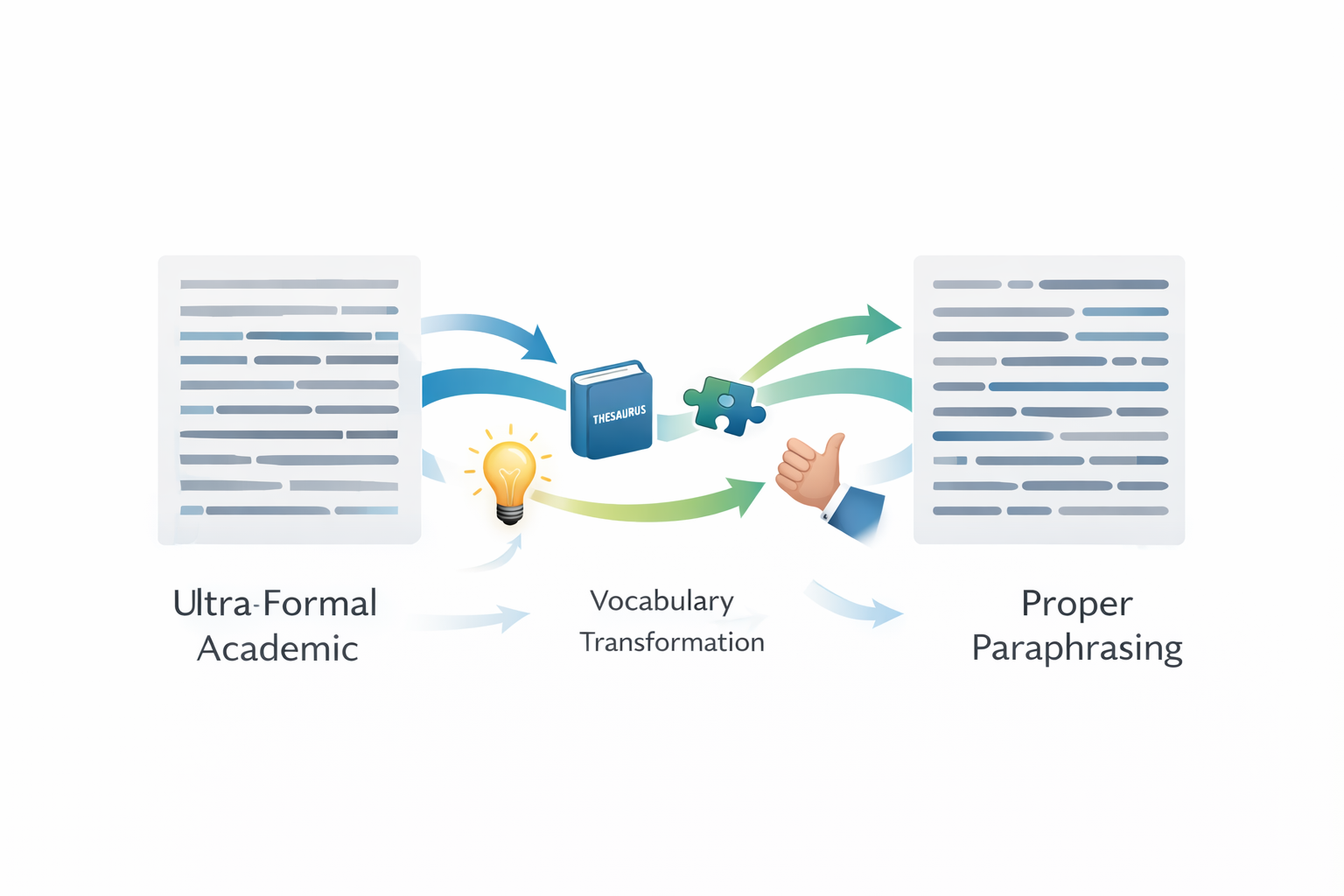
Figure 1: Plagiarism vs. Proper Paraphrasing Comparison. Visual distinction between unacceptable copying and acceptable paraphrasing with attribution.
The critical distinction lies in transformation and attribution. A proper paraphrase transforms the original text substantially while citing the source. Plagiarism either fails to transform the text adequately or omits the necessary citation—or both. Consider this example: if an original source states, "Students frequently overuse direct quotation in taking notes, and as a result they overuse quotations in the final research paper," a plagiarized version might read, "Students often use too many direct quotations when they take notes, resulting in too many of them in the final research paper." This version changes a few words but maintains the sentence structure and key phrases, making it plagiarism even if the writer intended to paraphrase.
Proper paraphrase: "In research papers, students often quote excessively, failing to keep quoted material down to a desirable level. Since the problem usually originates during note taking, it is essential to minimize the material recorded verbatim (Author, Year)."
The Problem of Patchwriting
Patchwriting represents one of the most common forms of unintentional plagiarism among students. It occurs when a writer rephrases a portion of source material but remains too close to the vocabulary and sentence structure of the original text. While all patchwriting is a form of paraphrase, successful paraphrase is not patchwritten. The distinction matters because patchwriting, when it appears in a final draft, is typically considered plagiarism by instructors and academic integrity boards.
Patchwriting often emerges from a genuine struggle to understand complex source material. When encountering unfamiliar jargon or technical terms specific to a field, students may find it difficult to express the original author's ideas without borrowing the author's language. If you notice yourself struggling to put a passage into your own words, this signals that you may not fully understand the concept—prompting you to seek additional sources, definitions, or explanations. Our expert guide on how to not plagiarize covers these principles in depth.
The Six-Step Method for Effective Paraphrasing
Successful paraphrasing follows a systematic process that ensures both comprehension and transformation of the source material. This six-step method, endorsed by major academic writing centers including Purdue OWL and Johns Hopkins University, provides a reliable framework for how to paraphrase without plagiarizing while incorporating external sources into your work.
Step 1: Read and Reread Until You Understand
Begin by reading the original passage multiple times until you grasp its full meaning. Do not attempt to paraphrase something you do not fully understand. If the passage contains unfamiliar terms or complex concepts, look them up.
Step 2: Set the Original Aside
Once you understand the passage, physically set it aside or close the document. When the original text is visible, you are more likely to unconsciously borrow its vocabulary and structure. By removing it from view, you force yourself to rely on your understanding rather than the author's exact words.
Step 3: Write Your Version in Your Own Words
Without looking at the original, write down the main idea in your own words. Use your natural vocabulary and sentence structures. Imagine you are explaining the concept to a friend who has not read the source material.
Step 4: Compare and Check for Accuracy
After writing your paraphrase, return to the original passage and compare them carefully. Verify that your version accurately represents the original meaning without distortion or omission of important details.
Step 5: Use Quotation Marks for Distinctive Language
Some terms or phrases are so distinctive or precise that they cannot be easily replaced. In these cases, use quotation marks to indicate that you are borrowing the exact wording from the source. See our guide on how to cite a paraphrase for proper formatting.
Step 6: Record the Source Information
Immediately record the complete source information, including author, title, publication date, and page number. Do this before moving on to your next task. Many instances of plagiarism occur not from intentional theft but from careless note-taking.
Five Proven Paraphrasing Techniques
Beyond the systematic process, specific linguistic techniques can help transform source material into genuinely original expression. These five techniques can be used individually or in combination to create effective paraphrases.
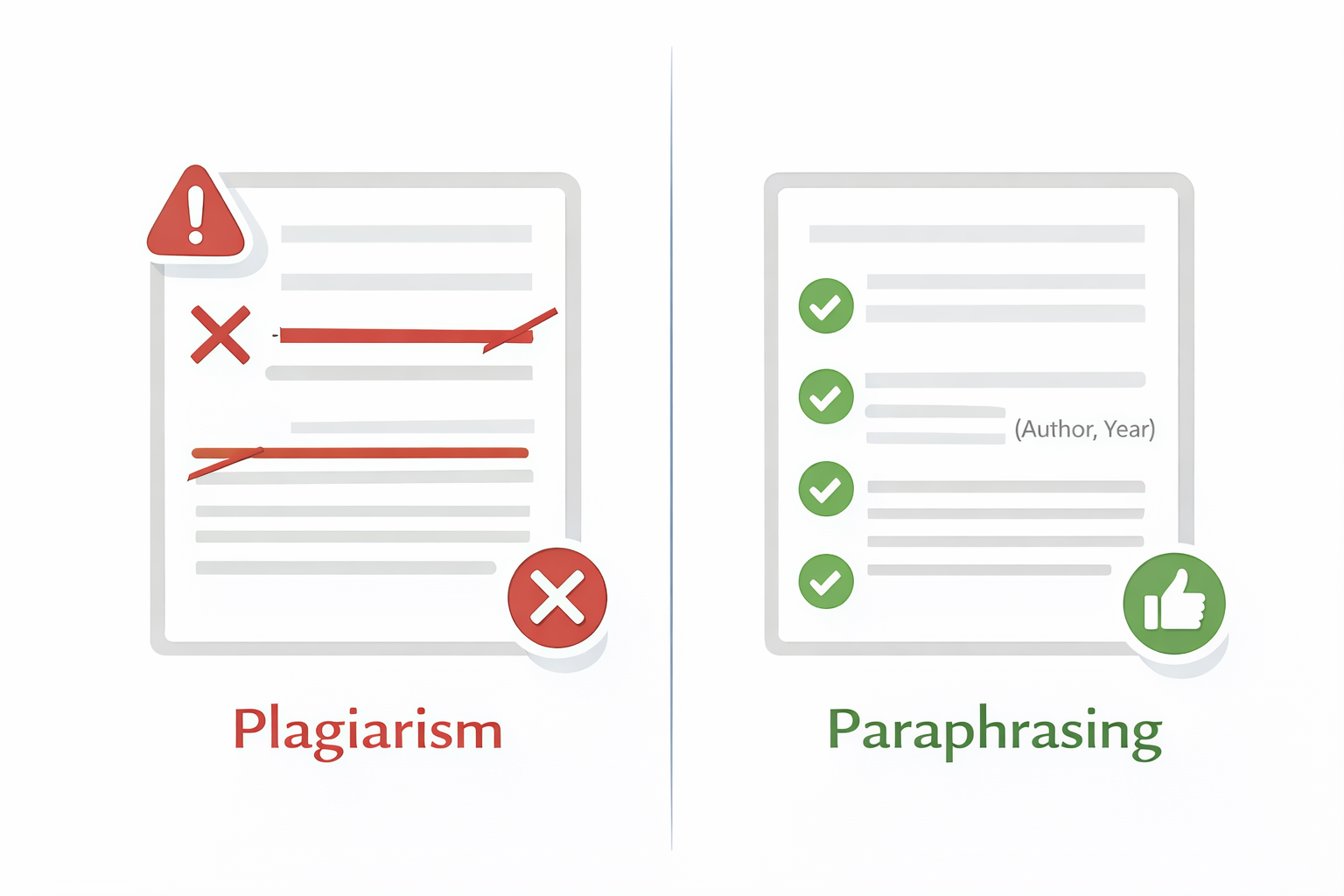
Figure 2: Paraphrasing Transformation Process. Comprehension, vocabulary transformation, and structural reorganization—the three core elements of successful paraphrasing.
Technique 1: Use Synonyms
The most fundamental technique involves replacing keywords in the original passage with synonyms that convey the same meaning. Focus on important nouns and verbs rather than function words. However, synonym substitution alone is insufficient—it must be combined with other techniques to avoid patchwriting.
Technique 2: Change Word Forms
Transform the grammatical form of words while maintaining their meaning. Convert nouns to verbs, verbs to nouns, adjectives to adverbs. Example: "consumption" becomes "consumed."
Technique 3: Change from Active to Passive Voice (or Vice Versa)
Altering the grammatical voice of sentences creates substantial structural change while preserving meaning. Example: "The developers invested $40 million" becomes "$40 million was invested."
Technique 4: Change Word Order
Rearranging the sequence of information within a sentence or across sentences can create significant transformation. Break one long sentence into multiple shorter ones, or combine short sentences into a longer one.
Technique 5: Combine Multiple Techniques
The most effective paraphrases use two or three techniques simultaneously. Combining synonym substitution with voice changes and word order restructuring creates transformation that is both substantial and natural. Tools like Rephrazo perform this structural transformation automatically, helping you achieve genuine originality. See our best paraphrasing tool without plagiarizing guide for a comparison.
When to Paraphrase and When to Quote
Paraphrasing is generally preferable when the content of the source is more important than the specific wording. If you are conveying factual information, explaining a process, or summarizing an argument, paraphrasing allows you to integrate the information smoothly into your own writing voice. Direct quotation is appropriate when the exact wording of the source is significant—when the author has expressed an idea with particular eloquence or precision, when you are analyzing the specific language used, or when the source is a primary document. Most academic writing guidelines suggest that no more than 10–15% of a research paper should consist of direct quotations.
The Role of AI Paraphrasing Tools
Modern technology has introduced AI-powered paraphrasing tools that promise to help students reword text quickly. These tools use machine learning algorithms to replace words with synonyms and restructure sentences while attempting to preserve meaning. However, AI paraphrasing tools carry significant risks: they can produce text that is too similar to the original, resulting in plagiarism; they often produce awkward or inaccurate paraphrases; and relying on them prevents you from developing critical thinking and writing skills.
If you choose to use an AI paraphrasing tool, it should be used as a starting point rather than a final solution. Generate a paraphrase with the tool, then extensively revise it yourself to ensure accuracy and genuine transformation. Always cite the original source—using a paraphrasing tool does not eliminate the need for citation.
Privacy-first alternative: Rephrazo processes all text locally on your device, so your academic work never leaves your computer. Unlike cloud-based tools that store your input, Rephrazo performs structural transformation—not just synonym swapping—helping you paraphrase without plagiarizing while protecting your intellectual property. Download Rephrazo free and rewrite with integrity.
Privacy and Data Security Considerations
When using any online paraphrasing tool, students should be aware of privacy implications. Many free online tools store the text you input, potentially including portions of your academic work. Submitting your work to an online platform may violate your institution's academic integrity policies. Look for tools that process text locally on your device rather than uploading it to cloud servers. For maximum security, develop strong paraphrasing skills that do not require external tools—or choose privacy-first tools like Rephrazo that never upload your content.
Common Mistakes and How to Avoid Them
Mistake 1: Synonym Substitution Only—Combine synonym use with structural changes, voice alterations, and word order modifications.
Mistake 2: Forgetting to Cite—Any time you use ideas or information from a source—even if completely reworded—you must cite that source.
Mistake 3: Paraphrasing Without Understanding—Take time to research unfamiliar concepts before attempting to paraphrase.
Mistake 4: Keeping the Original Visible—Read and understand the passage, then set it aside completely before writing your paraphrase.
Mistake 5: Paraphrasing Too Much—Balance paraphrase with direct quotation and, most importantly, with your own analysis and interpretation.
Academic Integrity and Responsible Use
Understanding paraphrasing techniques is ultimately about more than avoiding punishment—it is about developing intellectual honesty and contributing responsibly to academic discourse. When you paraphrase properly and cite sources accurately, you are participating in the scholarly conversation. For more on ethical writing practices, see our ethical essay rewriting guide.
Frequently Asked Questions
Q: How do I paraphrase without plagiarizing?
A: Use the six-step method: read until you understand, set the original aside, write in your own words, compare for accuracy, use quotation marks for distinctive phrases, and record source information. Combine multiple techniques—synonyms, word form changes, voice changes, and word order—for substantial transformation.
Q: What is the difference between paraphrasing and plagiarism?
A: Paraphrasing restates another's ideas in your own words and structure while citing the source. Plagiarism presents another's words or ideas as your own without proper attribution. Patchwriting—making only minor word changes while keeping the original structure—is considered plagiarism.
Q: Can I use AI to paraphrase without plagiarizing?
A: AI tools can help as a starting point, but you must extensively revise the output, verify accuracy against the original, and always cite the source. Choose tools that perform structural transformation (not just synonym swapping) and process text locally to protect your privacy. Rephrazo is designed for this ethical use.
Q: Do I need to cite when I paraphrase?
A: Yes. Any time you use ideas, information, or arguments from a source—even if completely reworded—you must cite that source. Paraphrasing is not a substitute for citation; it is a way of incorporating sources while maintaining your own voice.
Q: When should I paraphrase instead of quote?
A: Paraphrase when the content matters more than the exact wording—for factual information, process explanations, or argument summaries. Quote when the specific wording is significant—for eloquent or precise expressions, language analysis, or primary source evidence.
Conclusion
Mastering how to paraphrase without plagiarizing is a fundamental skill for academic success. It requires genuine engagement with source material, intellectual honesty, and practice. The six-step method provides a reliable framework, while the five linguistic techniques offer concrete strategies for transformation. Understanding when to paraphrase versus when to quote, recognizing the limitations of AI tools, and avoiding common mistakes will help you navigate academic writing with confidence.
Approach paraphrasing not as a burden but as an opportunity to engage more deeply with ideas and to develop your own scholarly voice. By following the principles in this guide, you can incorporate external sources effectively and ethically. Ready to paraphrase with integrity? Download Rephrazo free—the AI tool that rewrites locally and never stores your text.