Sentence Rewriter Tool: Expert Guide to Responsible Academic Writing and Workflow Efficiency
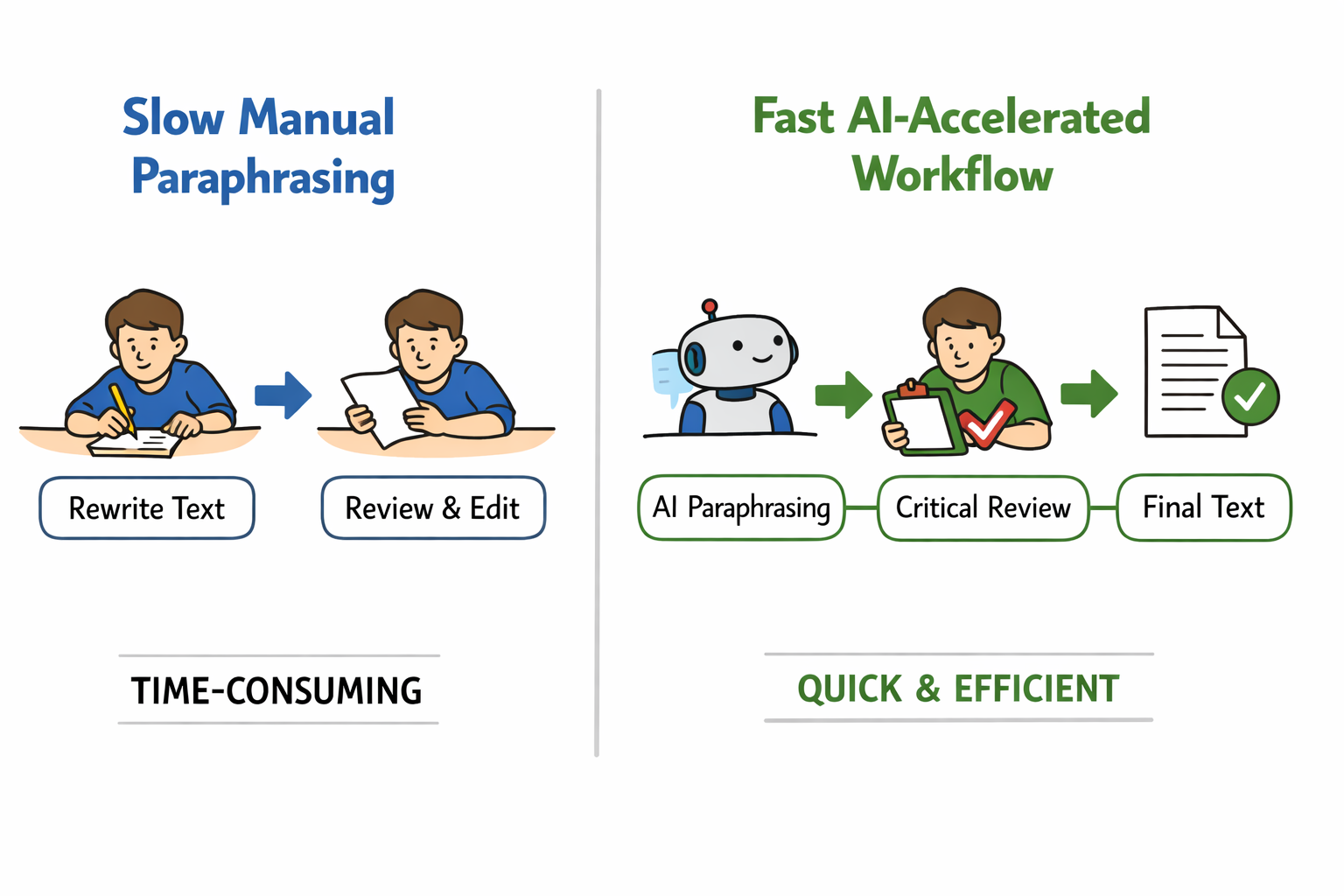
The shift from slow, manual paraphrasing to an efficient, AI-accelerated academic workflow. The AI path includes a mandatory 'Critical Review' step, emphasizing user responsibility.
Introduction
Every student and researcher has faced the moment of staring at a paragraph, knowing the source material is essential, but struggling to integrate it into their own work without resorting to direct quotation. This is the academic pain point: the need to accurately and authentically convey complex ideas while maintaining a unique voice and, critically, avoiding accidental plagiarism. The traditional solution—manual rewriting—is a significant time sink, often leading to frustration, missed deadlines, and sentences that feel clunky or forced.
The rise of artificial intelligence has introduced the sentence rewriter tool as a powerful alternative. However, its adoption in academic settings is fraught with questions of ethics, integrity, and effectiveness. As an SEO content strategist focused on E-E-A-T (Experience, Expertise, Authoritativeness, Trustworthiness), our goal is not to promote a shortcut, but to provide an expert framework for using these tools responsibly. A modern, high-quality sentence rewriter is not a replacement for critical thinking; it is a sophisticated utility designed to enhance clarity, improve flow, and accelerate the mechanical aspects of drafting, allowing you to focus on the intellectual core of your work.
This guide will provide a deep, experience-driven comparison of manual and AI-powered rewriting, establish clear boundaries for ethical use, and introduce a privacy-first solution that aligns with the highest standards of academic trustworthiness. Learn more about how to avoid plagiarism in your academic work.
Manual Rewriting vs. The Modern AI Sentence Rewriter: A Deep Comparison
For decades, the only accepted method for integrating external sources was the painstaking process of manual paraphrasing. This method, while intellectually rigorous, comes with significant hidden costs that often derail a student's workflow.
The Hidden Costs of Manual Paraphrasing
Manual paraphrasing demands intense cognitive load. It requires simultaneously understanding the source text, recalling a diverse vocabulary, restructuring sentence syntax, and ensuring the new text flows seamlessly with the surrounding content. This is not just a matter of effort; it is a matter of time and mental energy that could be better spent on research, analysis, or developing original arguments. The pressure to meet deadlines often leads to "patchwriting"—a form of accidental plagiarism where the student changes only a few words while retaining the original sentence structure, a practice widely flagged by academic institutions.
Understanding AI Paraphrasing: Beyond Simple Synonym Swaps
Early sentence rewriter tools were rightly criticized for being little more than automated thesauruses, swapping out words without regard for context or nuance. Modern AI tools, however, operate on a fundamentally different principle. They utilize large language models (LLMs) trained on vast datasets to understand the semantic meaning of a sentence and generate entirely new, contextually appropriate phrasing. This is a crucial distinction: the goal is not just to change the words, but to generate a structurally and linguistically distinct sentence that preserves the original meaning. The best tools, like Rephrazo, focus on speed and integration, allowing the user to iterate on phrasing instantly, right where they are writing, eliminating the disruptive copy-paste loop.
To illustrate the practical difference, consider the following comparative analysis:
| Feature | Manual Paraphrasing | AI Sentence Rewriter Tool |
|---|---|---|
| Speed | Slow, dependent on cognitive load and focus. | Instant, high-speed generation via advanced LLMs. |
| Effort | High (requires deep focus and linguistic skill). | Low (requires critical review and acceptance/rejection). |
| Risk of Accidental Plagiarism | Moderate (due to "patchwriting" under pressure). | Low to Moderate (depends on tool quality and user review). |
| Linguistic Quality | High (if the writer is skilled and focused). | Variable (requires human oversight to ensure context and tone). |
| Workflow Integration | Poor (requires context switching and mental effort). | Excellent (especially with inline tools like Rephrazo). |
When to Use a Sentence Rewriter Tool—And When to Step Away
Expertise in using a sentence rewriter tool lies in knowing its appropriate boundaries. The tool is a utility for refinement, not a crutch for intellectual laziness. Using it effectively demonstrates an understanding of academic writing as a process of continuous improvement.
Appropriate Use Cases: Clarity, Tone, and Efficiency
A sentence rewriter tool is most valuable when the intellectual work—the research, the analysis, and the argument—is already complete. It excels in the following scenarios:
- Improving Clarity: When a sentence is grammatically correct but structurally convoluted, the tool can instantly suggest clearer, more direct phrasing. This is especially useful for non-native English speakers or those struggling with complex academic jargon.
- Adjusting Tone: Shifting a sentence from a casual tone to a formal, academic one, or vice versa, can be done quickly. This ensures consistency across a long document, a key element of authoritative writing.
- Accelerating Drafts: When integrating a complex citation, the tool can generate several distinct paraphrases in seconds. This allows the writer to choose the best fit, saving the 10-15 minutes that might have been spent manually wrestling with syntax.
- Avoiding Repetition: When you need to restate a core concept multiple times throughout a paper, the tool helps generate varied phrasing, preventing the text from becoming monotonous.
The Critical Review Step: Why the Human Editor is Still Essential
The moment you use a sentence rewriter, your responsibility does not end; it shifts. The Trustworthiness element of E-E-A-T demands that you critically review every output. AI models, while sophisticated, can still misinterpret context, introduce subtle factual errors, or generate phrasing that is technically correct but misses the nuance of your argument. The expert workflow is: Input → AI Rewrite → Human Review → Final Integration. If you cannot confidently verify that the rewritten sentence accurately reflects the source material and your intended meaning, you must discard it and try again. The tool accelerates the process, but the human brain remains the final arbiter of meaning and integrity.
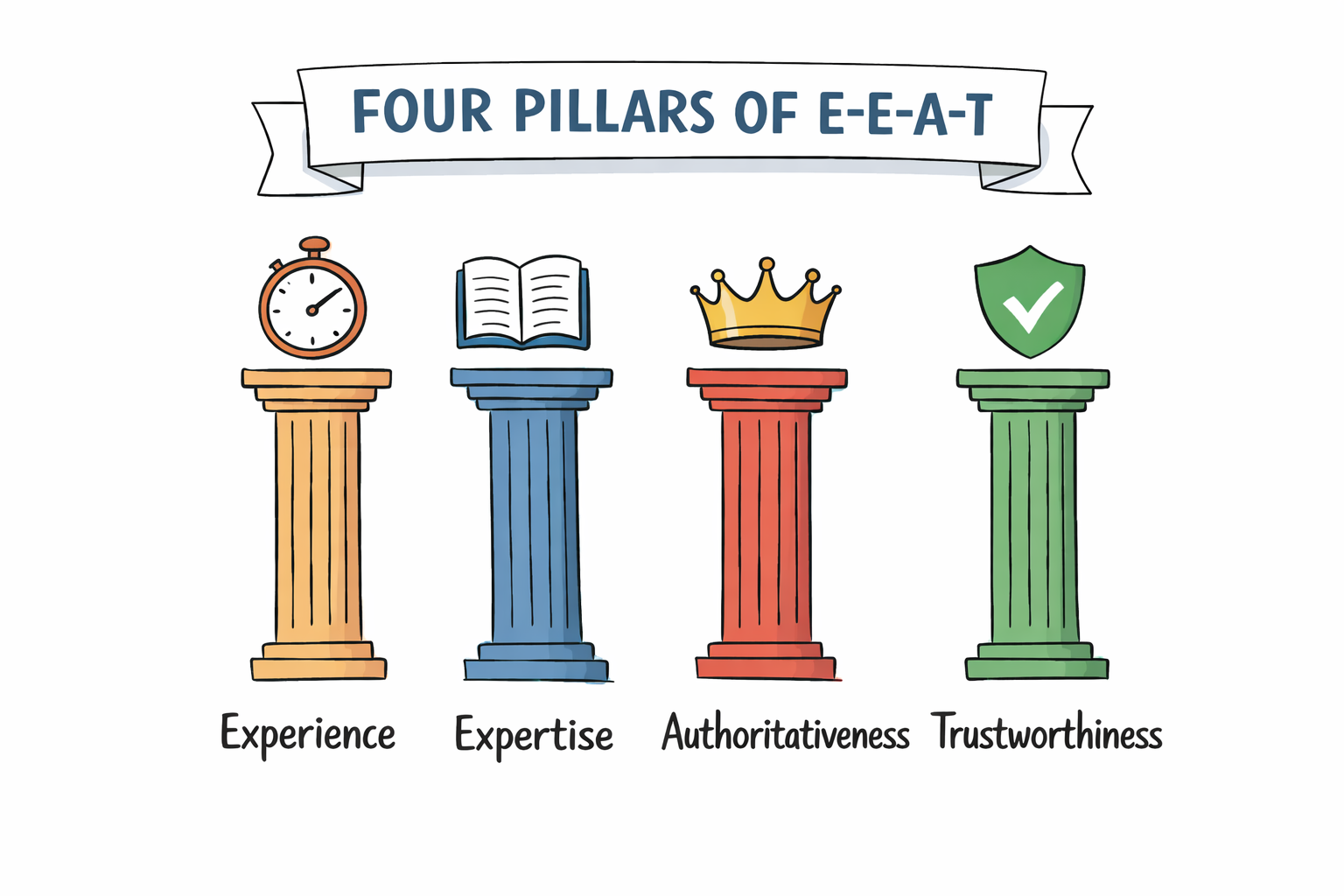
The foundation for high-quality, responsible content and tool selection in academia. Trustworthiness is paramount when handling sensitive academic work.
The E-E-A-T of AI: Privacy, Security, and Trustworthiness
In the academic world, the content of your drafts—your research, your arguments, your data—is highly sensitive intellectual property. The Trustworthiness pillar of E-E-A-T is therefore non-negotiable when selecting an AI tool. The primary threat to this trustworthiness comes from the architecture of most AI services: cloud-based processing.
The Cloud-Based Risk: Why Your Academic Drafts Need Protection
Most popular sentence rewriter tools operate by sending your text to a remote server (the cloud) for processing. This creates several significant security and privacy vulnerabilities:
- Data Exposure: Your sensitive academic drafts are temporarily stored on a third-party server, making them vulnerable to data breaches, server misconfigurations, or unauthorized access.
- Training Data: Many cloud-based AI services reserve the right to use submitted data to train their models. This means your unique research and phrasing could inadvertently become part of a public model, compromising the originality of your work.
- Compliance Issues: For researchers handling protected data (e.g., medical or proprietary information), sending text to a general-purpose cloud server can violate institutional or legal compliance requirements.
The expert choice recognizes that the convenience of AI should never come at the expense of privacy. The only way to guarantee the security of your intellectual property is to ensure it never leaves your device.
The Privacy-First Solution: Local Processing (Introducing Rephrazo)
Rephrazo was engineered specifically to address the trustworthiness gap in AI writing tools. By utilizing a local desktop application, Rephrazo processes your text entirely on your own computer. This architectural choice provides maximum security and aligns perfectly with academic integrity requirements:
- Zero Cloud Storage: Your academic drafts are never uploaded, stored, or processed on external servers.
- Data Sovereignty: You maintain complete control over your data at all times.
- Instant Speed: Eliminating network latency means the inline paraphrasing is virtually instantaneous, delivered via simple hotkeys directly within your writing application (Word, browser, etc.).
This approach positions Rephrazo not just as the fastest tool, but as the most practical and responsible choice for students and professionals who prioritize privacy and security. Discover more about QuillBot alternatives that prioritize privacy.
| Feature | Cloud-Based AI Tools (Typical) | Local Processing (Rephrazo) |
|---|---|---|
| Data Privacy | Low (Drafts uploaded to external servers). | High (Drafts never leave your device). |
| Security Risk | High (Vulnerable to server breaches and data leaks). | Low (Protected by local device security). |
| Internet Requirement | Always required for processing. | Minimal (only for initial setup/updates). |
| E-E-A-T Trustworthiness | Lower (Requires faith in third-party security). | Higher (Maximum user control and privacy). |
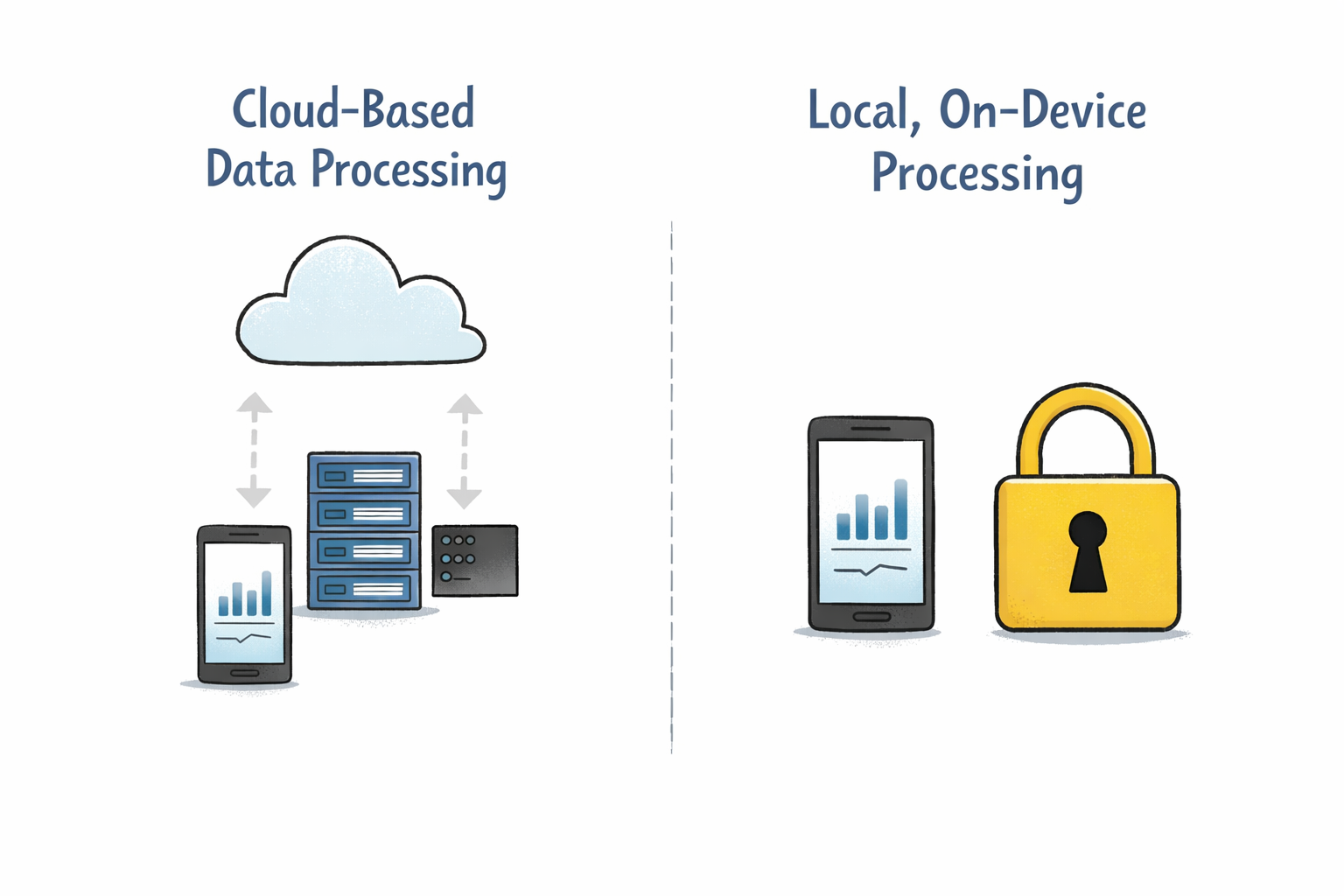
Data Security in AI Paraphrasing: Why local processing is the only true guarantee of privacy for sensitive academic drafts.
Common Student Mistakes and Expert Strategies for Academic Integrity
The Expertise component of E-E-A-T requires us to address the pitfalls that students commonly encounter when using sentence rewriter tools. The most significant mistake is confusing the tool's output with a final, authoritative statement.
The "Synonym Swap" Fallacy and Loss of Meaning
Even with advanced LLMs, the core danger remains the loss of meaning. If a student uses a tool to rewrite a sentence without fully grasping the source material, the resulting paraphrase may be grammatically sound but factually incorrect or contextually inappropriate. This is the "synonym swap" fallacy, where the writer focuses on changing words rather than understanding and conveying the underlying concept. This is a form of academic dishonesty, as it suggests the writer has mastered material they have not.
To avoid this, students must treat the AI output as a draft suggestion, not a final answer. The tool is best used to overcome writer's block or to find a better structural flow, but the writer must always compare the output against the original source to ensure semantic equivalence and accuracy.
Expert Strategy: Using the Tool for Refinement, Not Replacement
The expert strategy for responsible use involves a clear, three-step process that emphasizes Experience and Expertise:
- Deconstruct the Source: Before using the tool, manually summarize the source sentence's core idea in your own words. This ensures you understand the concept.
- Accelerate the Draft: Use the sentence rewriter tool (like Rephrazo's inline hotkey function) to generate a quick, structurally different version of the source text.
- Verify and Integrate: Critically review the AI output. Does it maintain the original meaning? Is the tone correct? Does it flow with your paper? Only after this human verification step should the sentence be integrated and properly cited.
By integrating the tool directly into the writing environment, Rephrazo facilitates this iterative, responsible workflow. The speed of the tool encourages experimentation and refinement, moving the user away from the high-risk, one-shot "patchwriting" approach. Learn more about rewriting essays effectively.
Frequently Asked Questions (FAQ)
Q: Is using a sentence rewriter tool considered plagiarism?
A: Plagiarism is the act of presenting someone else's work or ideas as your own. A sentence rewriter tool is a utility, much like a grammar checker. Using it to generate a paraphrase that you then review, verify, and properly cite is generally considered an acceptable part of the drafting process. However, submitting AI-generated text without critical review or claiming it as entirely original work is a violation of academic integrity. The responsibility always rests with the user.
Q: How does Rephrazo handle my data privacy?
A: Rephrazo is designed for privacy. It uses local desktop processing, meaning your academic drafts are processed entirely on your device. No text is uploaded to the cloud, and no data is stored on our servers. This ensures maximum security for your sensitive work.
Q: Can my professor detect that I used a sentence rewriter?
A: Detection software focuses on identifying patterns of plagiarism and AI-generated content. If you use the tool responsibly—for refinement and clarity, followed by thorough human review—the resulting text will be unique, contextually accurate, and indistinguishable from high-quality human writing. The key is to use the tool to enhance your voice, not replace it.
Q: What makes Rephrazo different from other sentence rewriter tools?
A: Rephrazo stands out through its local processing architecture, ensuring your data never leaves your device. Additionally, it works inline with simple hotkeys, eliminating the disruptive copy-paste workflow of web-based tools. This combination of privacy and seamless integration makes it ideal for academic work.
Q: How do I use a sentence rewriter tool ethically in academic writing?
A: Ethical use requires three steps: (1) Understand the source material before rewriting, (2) Use the tool to generate draft suggestions, not final answers, (3) Critically review and verify every output before integration. Always provide proper citations, as the ideas still belong to the original author. Learn more about plagiarism legality.
Conclusion
The modern academic environment demands both speed and integrity. A sentence rewriter tool can be a powerful ally in your writing workflow, but only when used responsibly and ethically. By understanding the boundaries of appropriate use, prioritizing privacy and security, and maintaining critical oversight of AI-generated content, you can leverage these tools to enhance your academic writing without compromising your integrity.
Remember: the goal is not to replace your critical thinking, but to accelerate the mechanical aspects of writing so you can focus on developing compelling arguments and original insights. Tools like Rephrazo, with their local processing and inline workflow, provide the perfect balance of efficiency and trustworthiness for the modern student and researcher.
Ready to improve your academic writing workflow? Download Rephrazo free and experience the power of privacy-first, inline sentence rewriting that works directly in your writing application. No copy-paste, no cloud uploads, just instant, secure paraphrasing at your fingertips.
Related Articles
Explore more guides on academic writing and AI tools: